How the SRI works
The Sustainable Retail Index (SRI) offers a dynamic, in‑depth view of retailers’ sustainability commitments and performance.
The SRI methodology was developed in partnership with Good On You, a leading sustainability ratings platform for the retail sector, and benefitted from the technical and critical expertise of WWF.
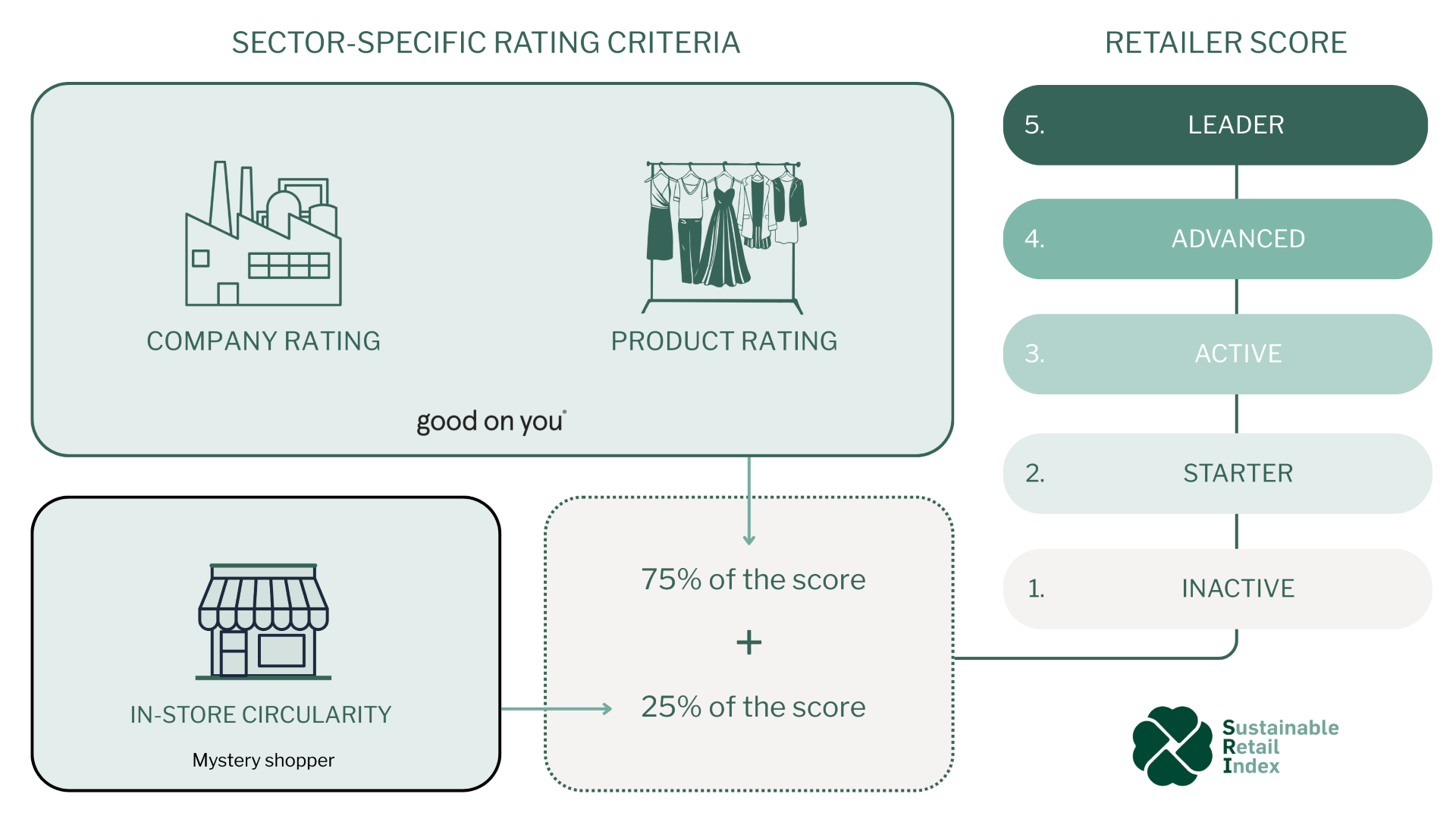
Retailers are evaluated in two key areas, which together form the SRI score:
- Brand rating (75% of the SRI score): Each brand is assessed on over 50 critical social and environmental issues, covering up to 1,000 data points, based solely on publicly available information. This score is provided by Good On You. Learn how Good On You rates brands
- In‑store practices (25% of the SRI score): Mystery shoppers collect store-level data in each shopping center, evaluating consumer‑facing practices that reflect retailers’ commitment to sustainability, with a particular focus on circular practices.
What do SRI Labels mean?
Each retailer is assigned one of five labels, benchmarked against the best performers in their industry:
- Leader (5/5): Consistently outperforming peers, setting industry standards in sustainability and transparency.
- Advanced (4/5): Performing above average, actively driving the industry’s transition to more sustainable practices.
- Active (3/5): Transparent about sustainability initiatives and demonstrating progress in one or more key areas.
- Starter (2/5): Showing initial progress on transparency and beginning to engage with sustainability.
- Inactive (1/5): Failing to meet basic standards of transparency or sustainability, with no clear commitment to improvement.
SRI Score Reporting
Aggregated SRI scores at the asset, regional, and group levels are calculated annually, with landlords deciding which results to publish. Individual retailer scores are not made public, but landlords can use them to guide constructive discussions with partners and support their sustainability journey.